NDA & Confidentiality Notice: To respect non-disclosure agreements with Vodafone, sensitive data, proprietary business rules, and specific system configurations have been anonymised, modified, or omitted. Interface designs, user journeys, and architectural wireframes shown below represent conceptual frameworks and high-level design thinking methodologies, rather than exact corporate production environments.
”Design isn't just how a product looks; it’s how an enterprise performs.
Over 7 years at Vodafone, 5 years of which I led the UX transformation of the internal ecosystem that handled millions of customer interactions daily.
By evolving our legacy Assisted Channel CRM and introducing predictive AI upgrades, we didn't just fix a tool—we fundamentally shifted the company’s bottom-line performance, customer satisfaction and regulatory standings.
The Core Problem and Challenges
Vodafone’s frontline customer service agents and digital touchpoints were bogged down by rigid legacy systems. This friction caused high handle times, agent cognitive fatigue, missed contract upgrade opportunities, and critical customer issues slipping through the cracks.
This directly resulted in poor initial customer satisfaction (NPS) and elevated regulatory complaints.
Pillar 1: The Assisted Channel CRM (System Architecture)
- The UX Work: Conducted massive internal user research sessions with call centre and retail agents. Redesigned multi-screen, confusing customer profile layouts into a unified dashboard view.
- Product Ownership Impact: Drastically cut down agent training times and average call handling time (AHT). Allowing agents to find billing errors and account histories instantly, preventing customer irritation before it escalated.
Pillar 2: The Predictive AI Upgrades Platform (Growth Engine)
- The UX Work: Designed the complex user flows for an internal AI recommendation engine. The system proactively suggested tailored, bespoke contract upgrades and data packages to agents while they were actively speaking to customers.
- Financial Impact: Transformed the customer care environment from a cost centre into a proactive revenue driver, directly accelerating conversion rates and pushing Vodafone to competitive market growth and helped accelerate EBITDA margins.
Pillar 3: The Unified Complaints Decision Tree, and Later Portal Creation (Friction Reduction)
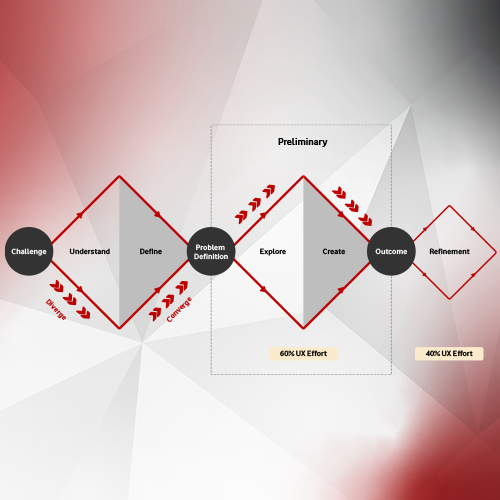
- The UX Work: Built a preliminary design thinking framework to map the exact trigger points of an unhappy user and impacts to the customers. This preliminary work ensured consistent alignment with engineering and business stakeholders, reducing spillovers in sprint.
- Business Impact: Streamlined resolution pathways that dropped customer escalation rates, pushing Vodafone into the top 3 lowest-complained-about mobile providers according to official Ofcom data.
From Lowest to Top 3 NPS:
Shifted customer perception and loyalty metrics entirely through frictionless service and UX design.
NPS, EBITDA & Market Growth:
By adopting preliminary design thinking and user experience, the optimisations directly generated higher-margins, earned customer trust and market growth.
Regulatory Benchmark:
Solidified Vodafone’s status as an industry leader for minimal Ofcom complaints.
Lessons Learned & UX Leadership
UX Leadership & Cultural Impact
Managing massive enterprise platforms over 5 years required more than just technical design; it required leading people, shifting corporate mindsets, and mentoring the next generation of product design talent.
- Scaling the Design Team: I directly spearheaded the hiring, onboarding, and continuous professional development of senior, mid-weight and junior UX designers. By establishing clear mentorship tracks, I helped team members transition into strategic, autonomous problem-solvers and leaders.
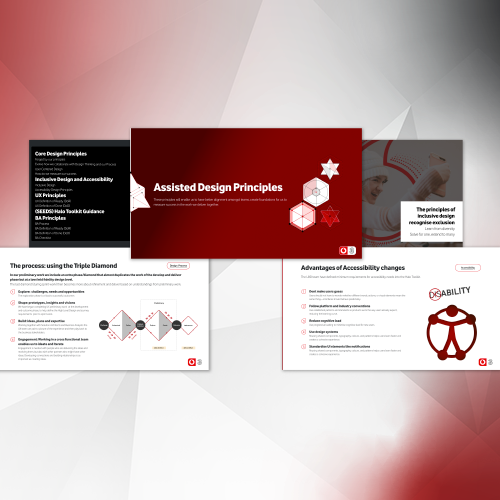
- Fostering a Culture of Design Thinking: I introduced cross-functional, collaborative workshops involving Product Managers, Customer Support Leads, and Engineering Executives. This broke down corporate communication silos and embedded preliminary user-validation practices into our standard feature-release cycle.
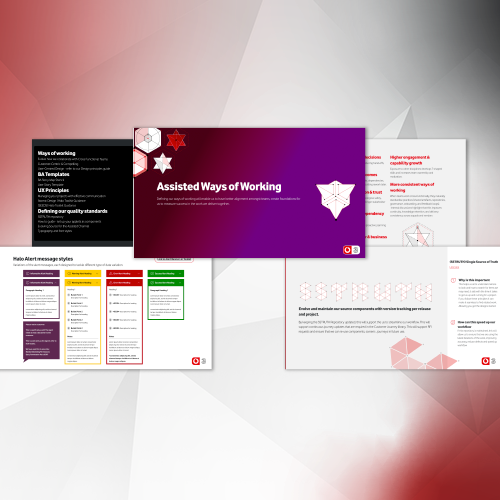
- Establishing Design Systems at Scale: I led our design team in creating, documenting, and enforcing a unified component library for internal tools. This systemic approach drastically cut down engineering front-end build times and ensured a seamless, intuitive UI language across all our internal tools.
Core Takeaways for Scaling Complex Systems
Preliminary discovery and research improved capability and reduced spill overs in sprint. Validated assumptions, consolidated technical alignment, solving complex cross-functional problems to drive product needs balanced with usability.
- Empathy for the Frontline is High-ROI: Building great software for internal customer service agents requires deep immersion. Sitting side-by-side with call centre agents and retail staff allowed us to spot systemic interface friction that could never be caught from an isolated office desk.
- UX Metrics are Business Metrics: UX leadership means learning to speak the language of business stakeholders. By directly mapping simple user-flow interactions to macro-level KPIs—like Ofcom regulatory compliant drops and contract upgrade values—we successfully incorporated continuous UX improvements into our ways of working, iterations and enhancements into various work-streams.
- Design for Long-Term Scalability: Over a 7-year timeline, technology stacks change entirely. Leading the shift toward flexible, component-based architectures ensured our systems remained agile enough to support complex integrations years after the original codebase was written.